Spring is a time of new beginnings, much like starting this blog is new to me. For my first post, I wanted to write about my five favourite spring wildflowers to honour these new beginnings. There are many planted flowers associated with spring, such as tulips, primroses and pansies. These are undeniably pretty, but I wanted to write about the wildflowers that bloom naturally in the spring months. These species are hardy and will grow without attendance in the most unusual places: from roadside verges to decaying logs. Some of these species are well-loved, such as the bluebell and the daffodil. Yet, some of the less well known species are just as beautiful and diverse. In sequence, I’ll share what I find most interesting about these five wildflowers – I’ve also sketched them to (hopefully) make it easier to identify their key features.
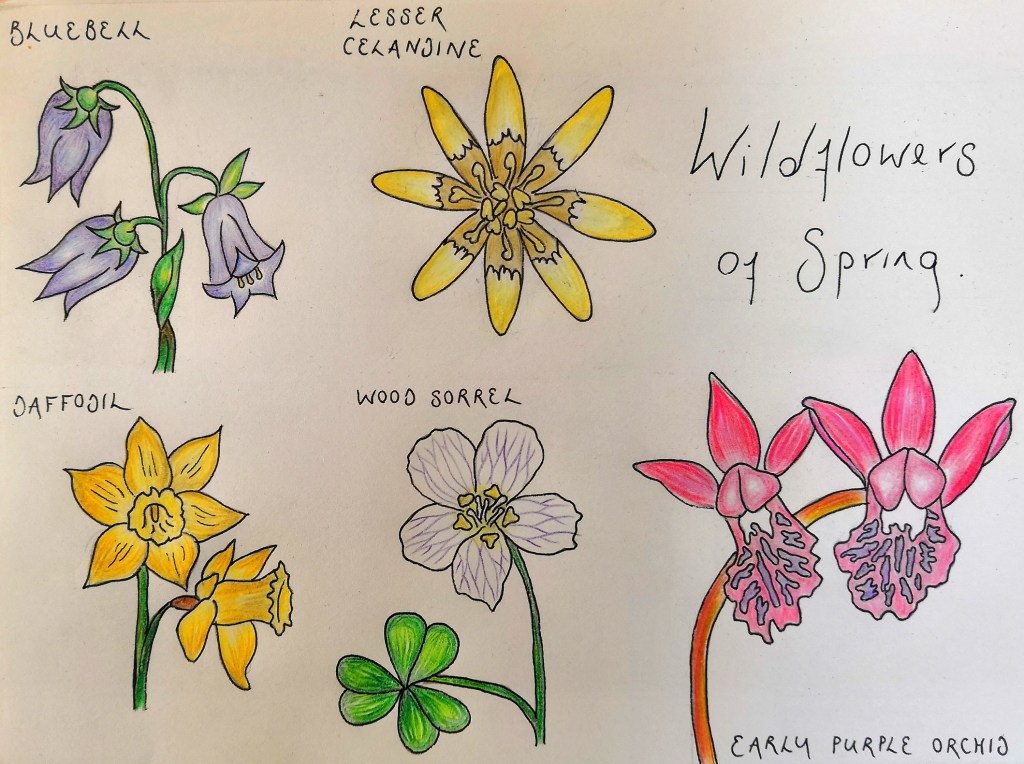
Bluebell
For many, spring begins at the sight of a carpet of bluebells under an open woodland canopy. The bluebell wood near my home is my favourite place to walk at this time of year. These sweet scented, vibrant flowers appear between mid-April and late May, while they spent the rest of the year as bulbs underground. Bluebells are a vernal species, meaning they bloom before the tree canopy reforms and out-shadows them.
Bluebell species –
There are two species of bluebell: the British bluebell (Hyacinthoides non-scripta) and the Spanish bluebell (Hyacinthoides hispanica). The Spanish bluebell was introduced to the UK in the late 1600s as a decorative flower. Sadly, cross breeding between the two species creates hardy hybrids that out-compete the UK bluebell. You can tell a hybrid bluebell from a native bluebell by colour: while our natives are a deep violet, the hybrids are a paler blue and can even be white or pink. To protect our native bluebell, be careful not to tread on them! These delicate flowers can take years to recover from footfall. Surprisingly, it is also illegal to intentionally pick bluebells because they are such an important native species in the UK.
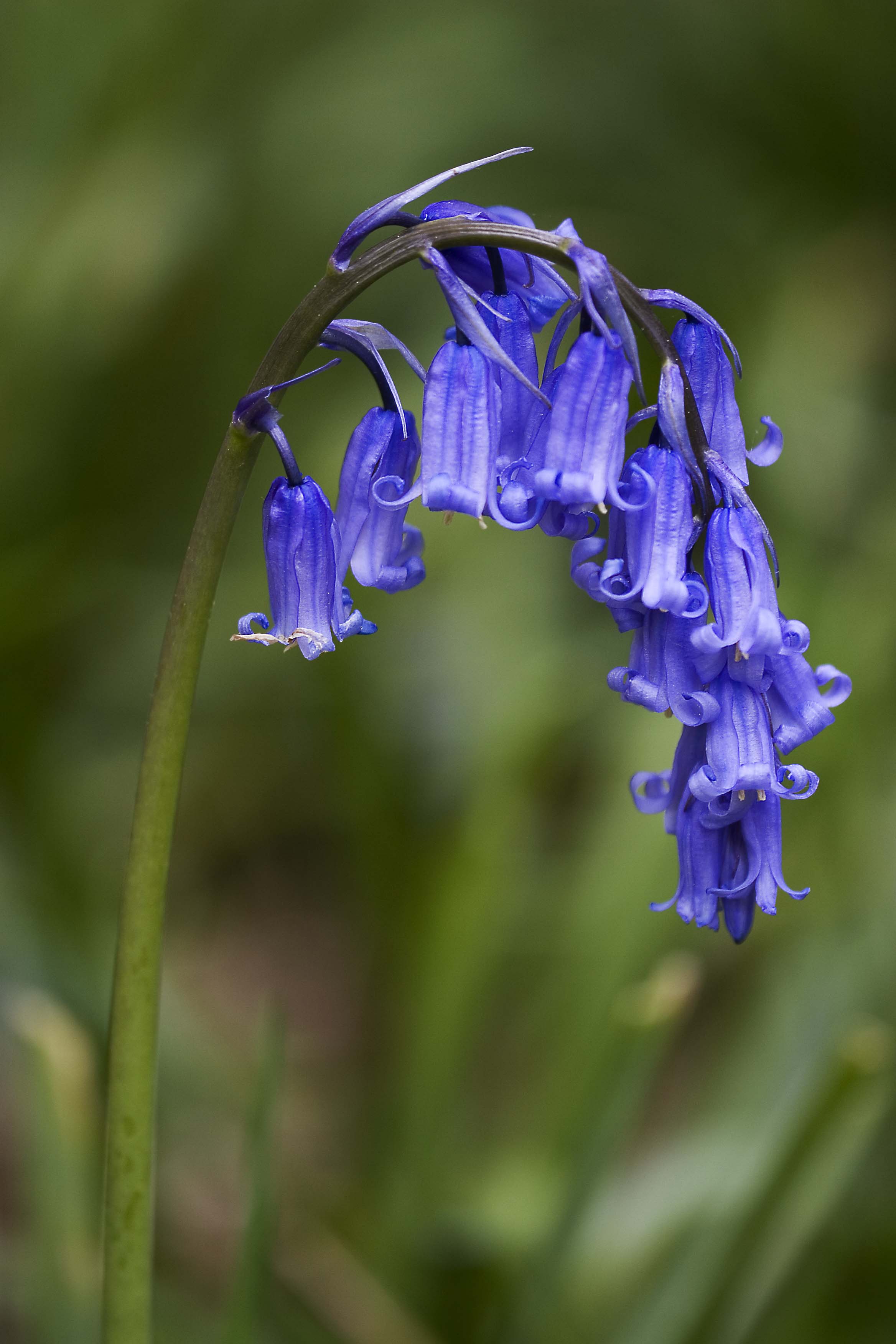
(Hyacinthoides non-scripta)
Bluebells and bees –
Bluebells are an important source of early nectar for the first honeybees emerging from the hive in spring. Honeybees might even steal nectar from bluebells by biting through the bottom of the bell, slacking on their duties as a pollinator for the species.
Lesser Celandine
These flowers are often likened to stars with their shiny, pointed petals. They bloom between March and May along damp woodland paths and streams. This species is a member of the buttercup family. Lesser Celandine are often described as the floral equivalent of the swallow. Both honour the arrival of spring and the name ‘celandine’ is thought to come from the Greek chelidon meaning ‘swallow.’
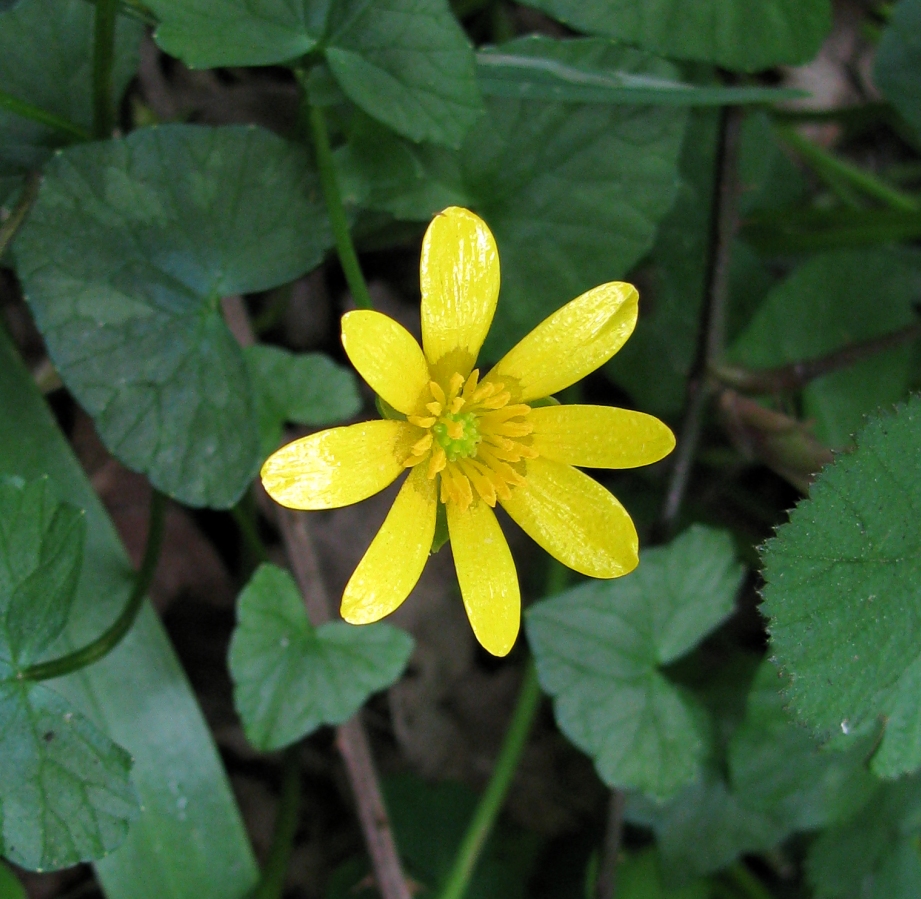
(Ficaria verna)
Sun worshippers –
Amazingly, Lesser Celandine respond to sunlight. They open at dawn and close at dusk. People used to think they could forecast rain as they close their petals just before the first raindrops fall.
Wordsworth –
Wordsworth’s iconic poem, ‘I Wandered Lonely as a Cloud,’ leads many to believe he had a particular fondness for daffodils. In fact, he seemed to prefer the Lesser Celandine and wrote three poems in honour of the flower throughout his lifetime.
“There’s a flower that shall be mine,‘Tis the little Celandine.”
William Wordsworth, ‘To the Small Celandine.’
Wood Sorrel
Blooming between April and May, I love to see the little white flowers of Wood Sorrel with their distinctive purple veins hiding in the shade of hedgerows. The species’ trifoliate leaves and its five petal fold up like a tent at night, reopening in the dappled morning sun.
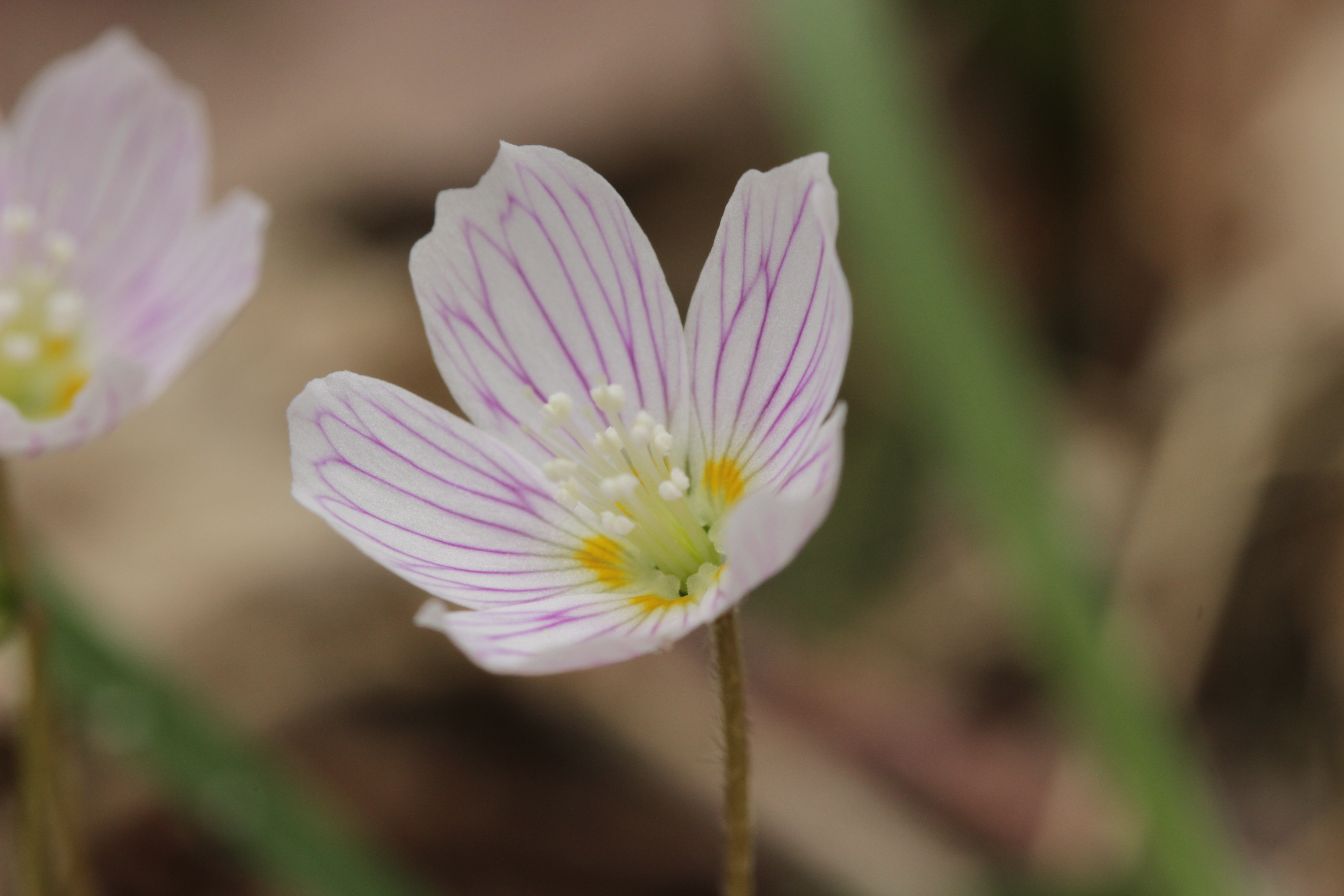
(Oxalis acetosella)
Edible flowers –
This flower is entirely edible and is often used as a garnish in salads. It can also be used to make sorrel sauce, soups and flavoured lemonade. The species is a member of the genus, Oxalis, meaning ‘sour.’ This refers to the high acidic content of the flower. Apparently, they taste like lemon! It is said that Native Americans would feed their horses Wood Sorrel to make them run faster.
Early Purple Orchid
As its name suggests, the Early Purple Orchid is the first orchid of the year to appear. When they first bloom between April and June, these flowers smell lovely. Once fertilised, they start to smell rancid…no wonder local names for the species include ‘Adder’s meat,’ and ‘Bloody Butchers.’ Another common name for the Early Purple Orchid is ‘cross-flower,’ arising from the legend that it grew under the Crucifix and was subsequently splattered with the blood of Christ.
This pretty purple orchid used to be widespread. Urbanisation and changes in agriculture have caused massive reductions in the distribution of the species. It truly is a wildflower adapted to a range of habitats, growing in: woodlands, hay meadows, chalklands, cliff-top grasslands and on roadside verges.

(Orchis mascula)
Ancient aphrodisiacs –
The Early Purple Orchid has two root tubers used for food storage. One is plump, filling up with resources for next year’s growth, while the other is slack as it empties to fuel current growth. It is thought that Ancient Greek woman would serve the tubers in goats milk to control their man’s desires: the plump tuber would excite desire, the slack tuber would restrain it. As a result, the orchid’s tuber has become known as an aphrodisiac throughout Europe.
Daffodil
Last but not least, the daffodil is probably the most loved spring flower. The daffodils we see adorning roadsides and parks are most often the garden variety. Wild daffodils used to be common in woodlands and damp meadows, but they are now quite rare to spot. Habitat loss drove their decline in the late 19th Century. How can we tell a wild daffodil from the planted variety? The leaves of the wild variety are grey-green. Wild and planted varieties share a similar golden yellow trumpet, but a collar of pale yellow petals surrounds the wild variety’s trumpet to create its characteristic two-toned head.
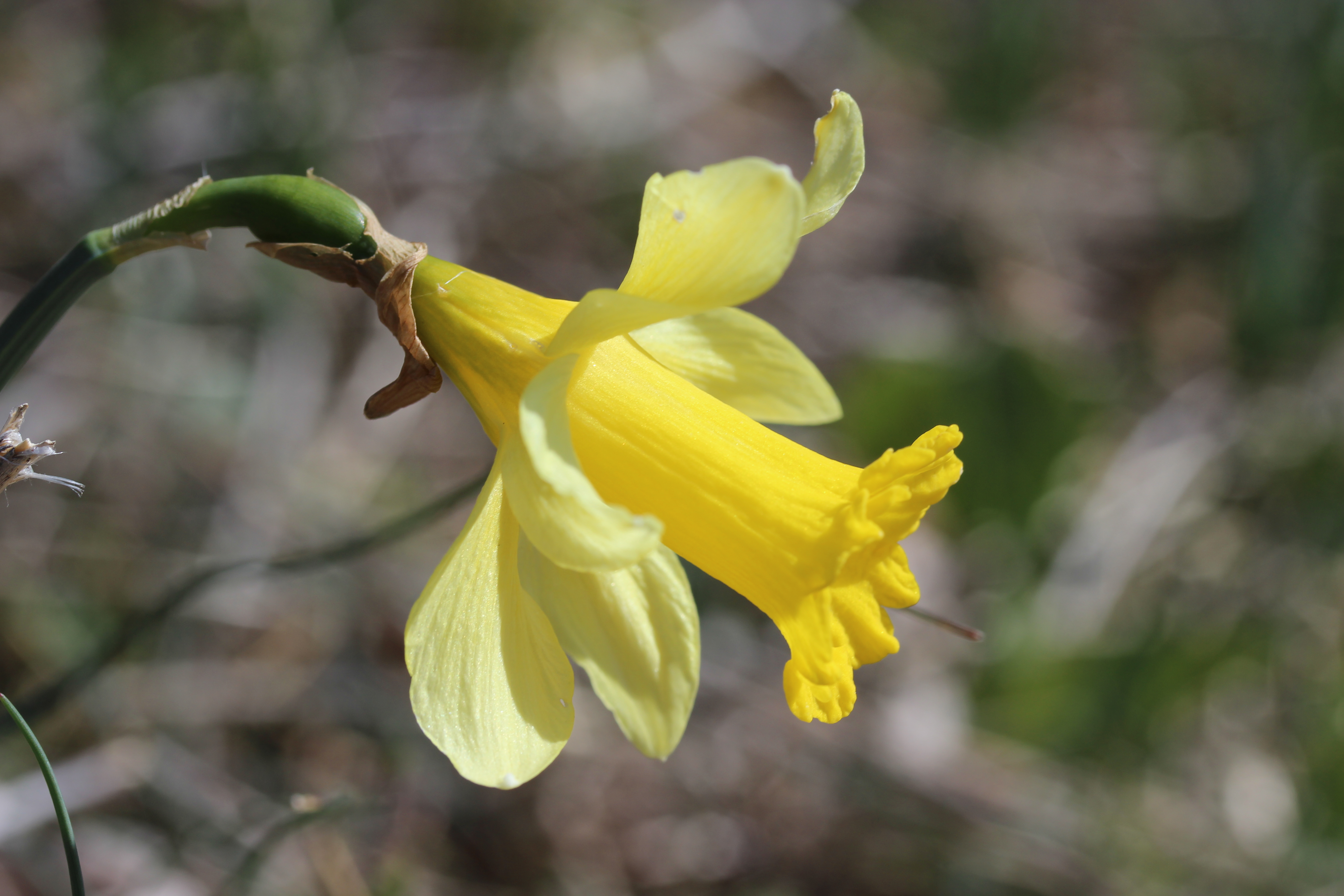
(Narcissus pseudonarcissus)
Greek mythology –
Though quite well known, I love the story of the origin of the daffodil’s Latin name, ‘Narcissus,’ so I’ll share it with you. According to the Greek myth, Narcissus fell in love with his own reflection when he saw it in a pool of water. As he leaned forward to get a closer look, he fell into the water and drowned. The nodding head of the daffodil represents Narcissus bending over the pool and it is claimed that the first daffodil sprang where Narcissus sat.
Sources –
Check out the Wildlife Trust and the Woodland Trust’s websites for more information on these five wildflowers and many others! I also found some interesting facts on the Plantlife website. I hope you enjoyed reading about these lovely species. I encourage you to get out and have a closer look for yourselves at the beautiful flowers blooming at the time of year!

 Bees, Trees & Curiosities
Gorgeous scratches libs xx
LikeLike
Thank you! Xxx
LikeLike